


What is Sublimation?
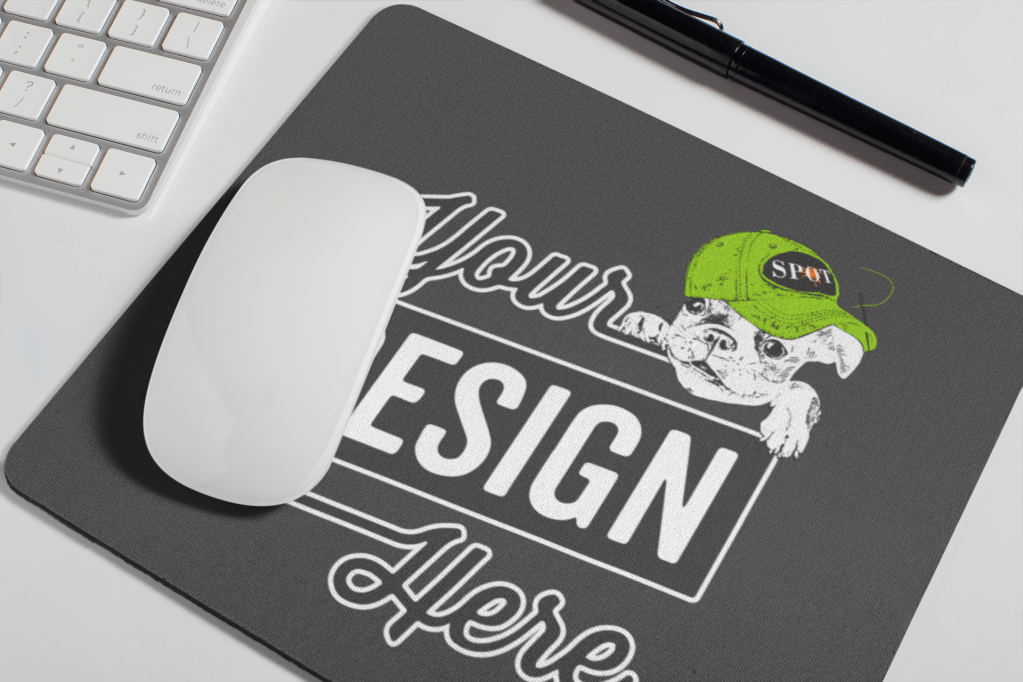
There are so many methods to print your impressive, long-lasting promotional products, why settle for just the simpler ones like screen printing and heat transferring? Sublimation combines the abilities of expansive printing, permanent print longevity, and creative synergy that allow your merchandise, and your brand, to explosively stand out from many others. Learn the process and the abilities of sublimation in order to diversify your collection of printed products.
About Sublimation
Sublimation is the rare changing state of matter in which a solid transitions into a gas without undergoing the liquid state. One of the most popular examples of sublimation is dry ice emitting gaseous carbon dioxide at any temperature above -78.5 degrees Celsius. Therefore, this special printing method involves turning dry ink into a gas that will absorb onto the printed substrate. Sublimation functions similarly to a heat transfer print; the difference is that a special, fast-drying sublimation ink is printed from a digital printer onto the transfer paper. The printer itself contains a wide format allowing it to print large designs for wide print areas. Then, the ink transfers onto the surface using a special heat press, heated to about 200 degrees Celsius, to cause the sublimation process. Synthetic substances, called polymers, will absorb the gaseous ink causing the substrate colors to change permanently while revealing a visually sharp image on the overall layout. Most sublimation prints are for garments; however, fabrics are not the only material to absorb sublimated ink. Merchandise with hard materials, such as metal and ceramic, are also suitable as long as their substrate is coated with a special polymer adhesive. With the polymer adhesive spray, the gases will connect easily with the substance and embed the hard substrate.
Advantages of Sublimation

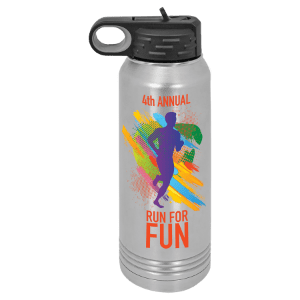
Sublimation has one of the most permanent longevities of all printing methods because the dyes change the color of the substrate instead of sit directly on top of it. The swift change of the surface colors, caused by the gaseous ink connecting to the polymers, make it impossible for the dyes to wash off regardless of cleaning method. In addition, the sublimation ink uses the powerful CMYK color combination allowing the printer to print photorealistic images. These high-quality prints can sublimate onto substrates with sharp precision resulting in the image appearing almost as perfect as the original photograph/design. The result of such precision is that sublimation printers offer a diversity of print sizes, especially in wide format. Sublimation prints can range from utilizing just the front of a product to wrapping around its entire circumference. Prints can even be inserted onto widescale substrates such as display banners! Most other printing methods do not have that powerful and permanent quality that sublimation does. They either limit the print to a certain size, like embroidery; limit the amount of color being used, like screen printing; or even limit its overall longevity, like direct-to-garment printing. Sublimation is ideal for printing high-quality images on a variety of different merchandise.
Disadvantages of Sublimation

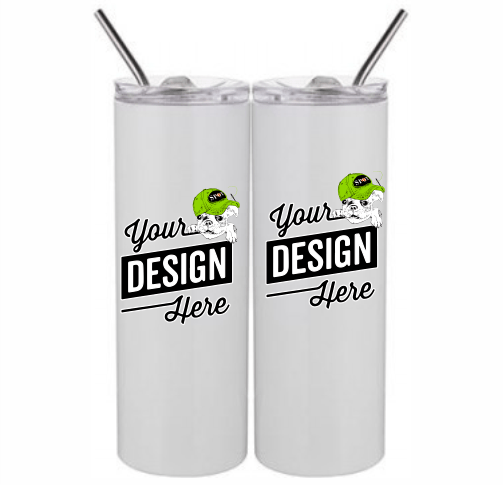
While sublimation features its widespread creative abilities and its permanent longevity, it still comes with some important discernments. One of the biggest disadvantages is cost. Sublimation printers, and other machinery, can cost tens of thousands of dollars. In addition, the sublimation ink, the polymer adhesive, and the transfer paper can cost around one hundred dollars each. Hence why merchandise usually costs more when sublimated than when using other printing methods like screen printed. Other, more practical, considerations are to never print on dark colors or to print on heavily absorbent garments like cotton. Because the gaseous ink changes the color of the surface, the ink can only saturate well if transferred onto bright colors. For example, running a marker onto black construction paper will cause the black surface to greatly absorb the color taking away the saturation. Therefore, dark-colored surfaces will wash out all of the sublimated colors regardless of the substrate type. Also, materials with polymers, like polyester and neoprene, are what keep the sublimated ink steadily placed onto any merchandise of such substrate. Heavily absorbent, natural fibers, like cotton, will cause widespread ink bleeding resulting in a blurry image. As for the merchandise with hard substrates, they cannot absorb the gas without spraying on the special polymer adhesive. Otherwise, the gases will bounce off very easily. Like all other print methods, sublimation requires a good observation of what does and does not work in order to make the print job successful.
Conclusion

Sublimation is a high-quality, scientifically advanced printing method that needs to be inserted onto the most durable, performance-ready products on the market. However, even with its outstanding capabilities, what matters most is preference. You might prefer high-quality sublimation merchandise, but you are probably better off utilizing direct-to-film printing or screen printing if cost or brand guidelines are a concern. It might be best to consider sublimated products a novelty rather than a primary line of production. If you can utilize sublimation, however, it is a fantastic print method to diversify and expand your line of merchandise for everyone looking to purchase and collect many different promotional products. The more unique your products are, the more likely customers will stick around to buy more merchandise from your brand.
 welcome to our blog